UK Office: 0044 (0)1440 820 358

Clé France

The French Property Network

Jan 31

Adventures in French Education: CM and TD

Remember the blog we published on getting 20/20 in the French education system?

Before the shock of not being able to get un vingt (a twenty), there is another big surprise that may be waiting for you dans une université française (in a French university).

If you have school age children and you are thinking of buying a house in France and moving to France full time then tell them that most classes in France tend to be broken down into “CM”s and “TD”s. That is lecture classes and “supervised” classes.

French education

Photo by Steven S. on Flickr

Now, the same idea does exist in UK universities and dans les universités américaines (in American universities), namely in the sciences where there’s the main class and a laboratory attached to it. In France the idea is applied much more generally and the style of teaching is completely different.

CM stands for Cours Magistral, and is often explained as, “c’est comme un seminar chez vous  (It’s like your seminar classes) !”

En général (in general) think of it as a lecture class where le professeur (the professor) goes through une leçon (a lesson) while the students write down notes. This requires intense listening and visual skills and concentration, when we first moved to live in France full time this was the one thing our son found most difficult, until we realise he needed spectacles!

However, there are some big differences. Sitting through your first CM and being barely able to follow what le professeur is saying, you mat be surprised to see nearly all of votre camarades de classe (your classmates) keeping impeccable notes, with outlines clearly built in, even including footnotes and colours.

Don't worry you will get the hang of it very quickly.

Thinking of moving to France full time? - book a viewing trip with Cle France today!

Cle France savings

Blog submitted by: Sharon at The French Property Network - Cle France.

This blog was originally posted on The French Language Blog pages.

Add CommentViews: 5917
Jan 30

French Television: Le Petit Journal

When learning a new language, finding entertainment that’s similar to what you like in your native language can be a big motivation booster, so when I found Le Petit Journal, I was happy to have found what is more or less une version française d’une des mes émissions préférées (a French version of one of my favourite shows).

Turning the TV on in France the day after you have bought your perfect French Property can be a shock, French TV if you have lived all your life in France is fine BUT if you are used to something wider and more varied in quality, the UK or America for example then living in France and watching just French TV may be a education!

French TV

Photo by Daniel Horacio Agostini on Flickr

Les deux émissions partagent souvent des convictions politiques et le sens de l’humour (the two shows often share poltical views and sense of humor), making l’émission française (the French show) a fun way to stay up to date on what’s happening in France.

The host, Yann Barthès, keeps things going with his commentaires drôles (witty commentary) filling the show with jokes and a light hearted playfulness, but also leaving room to get serious for tough issues and interesting interviews.

En général, if you’re a fan of The Daily Show, you’ll enjoy Le Petit Journal. After watching just a few episodes you’ll surprise your French friends with your knowledge of French politics and French pop culture.

The humor of Le Petit Journal is not for everyone. It is often enfantin et immature (childish and immature) and can borderline on antagonistic mocking. Cependant (however), it’s all in good fun and everyone laughs.

Now you know what to watch on TV - book a viewing trip with Cle France today!

Cle France savings

Blog submitted by: Alex at The French Property Network - Cle France.

This blog was originally posted on The French Language Blog pages.

Add CommentViews: 3673
Jan 15

A Cup of Coffee: Un Café S’Il Vous Plait !

I remember having to 'go for a coffee' about 3 or 4 times before I found the right coffee to order when on my own viewing trip in France looking for the right French house in the late 1990s.

Much later I remember David coming home for lunch after meeting some artisans, electricians, plumbers, roofers etc. in a cafe one morning and one of the artisans was runnig late so they all waited and ordered more cafe, after the 4th cup David said he was 'coffee drunk' and as light headed as the time he was waiting on another person and the 'Calvados' bottle came out! but that is another story...

Coffee with Cle France

Photo by Karol Franks on Flickr

As a fellow coffee lover the first things a friend of mine wanted to do after arriving in France was to, bien sûr (of course), prendre une tasse de café (grab a cup of coffee). She got off the plane, jetlagged and groggy from the long-haul flight, but still had the idea of that tasse in her head.

After making her way across Paris to her hotel room for the night she went out into the clmly lit streets of Paris in search for the perfect cup of coffee, how she thought she woud get to sleep that night I will never know! Naturally she found un petit café juste à côté de la Tour Eiffel (right next to the Eiffel Tower) and sat down. When viewing property in France with Cle France on a house hunting trip looking for that perfect French house to buy, do make sure you take time to stop at a Cafe and watch the world go buy, it will help you soak up the atmosphere of where you are and may wish to buy a house and perhaps even move to full time? as my friend glanced at the menu panic set in:

Café au lait

Latte macchiato

Café crème

Noisette

Cappuccino

Americano

Café viennois

There were some menu items je ne conaissais pas (I didn’t know) let alone my friend with minimum understanding of French, but, I guess, for the most part the names were easy to understand. She just wanted a simple coffee! why should it be so complicated!

When it came time to order, she said in her best French, 'Un café, s’il vous plaît' (a coffee, please), and waited for the much desired drink to come back in a few moments after lots of squirting and frothing from behind the counter.

The barista came back with her drink and put it down on my table with, the very reasonable, l’addition (the bill), then off like a shot to serve the next customer.

'He got my order wrong' was her first thought as she looked at la petite tasse de café (the small cup of coffee) sitting next to a small rectangular cookie and a few lumps of sugar almost as big as the cup. Son français (her French) wasn’t good enough to argue about it so she just drank the café and went on with her strole thourhg the streets of Paris.

However when the same problem happened again, and again, and again, she began to realise that 'un café' is not the same thing as 'a coffee', a quick phone call and all was explained.

Ordering a café is ordering what we would call an espresso! The big coffee drink that we know as 'a cup of coffee' is not that easy to come across in France but I guess the equivilent, and my oprder of choice is a 'Café crème' which often comes with a glass of water to freshen the mouth! so if you’re going to un café français (a French cafe) you may be a little more prepared now? or just do as my friend does and happily (and knowingly) say, 'un café, s’il vous plaît'.

Now you know what to order - book a viewing trip with Cle France today!

Cle France savings

Blog submitted by: Sharon at The French Property Network - Cle France.

This blog was originally posted on The French Language Blog pages.

Add CommentViews: 5080
Jan 9

French Education System 20/20 ?

Studying in France: A Perfect Score.

If you are planning to move to France with school age children then read on and by all means get your children to read this blog, we hope it helps and if you want more insight then leave a comment and we will follow it up, also if you have first hand experience of the education system then please also leave some comments.

We get lots of people asking us about the buying process and viewing property for sale in france with us but we also get hundreds of questions about the various aspects of living in France once people see a property they like and mark as a favourite, one of the most common questions is about the French education system and their concerns about putting thier children through the French system.

We have done that with our children and helped and advised many others on every aspect over the years so here we are adding some insights in the form of blogs to the Cle France website to help you understand the differences.

Living in France 20 out of 20

Photo by Tal Bright on Flickr

Les examens… If you are currently in the middle of your exams or you are about to passer les examens (take exams) and hope you can réussir les examens (pass exams) we wish you all the luck in the world, perhaps you are thinking of moving to France?

Let us just take a moment to see how different the grading system is in France, so you know what to expect.

The very first thing that will jump out to a non-French person is that grades are not based on an A, B, C, D, F system; they are not a percetage or even a 0-100 scale. Instead everything is based on a 0/20 marking system, with 10/20 being the basic "Pass" grade.

The other oddity (to us at least!) of the French grading system is that there is a strong emphasis on the idea that “personne n’est parfaite” (nobody’s perfect), quite refreshing in its own way. So teachers and 'profs' almost never ever give out a grade of 20/20! or at least I never got one!

Before people start yelling at me that it is just me that never got 20/20, “mais c’est faux ! Il  y a des profs qui donnent des 20s !” (That’s not true! There are teachers that will give you 20s!), yes I guess, it is true that it is possible to achieve the much desired vingt sur vingt (twenty out of twenty), but it is rare and in general, on le donne pas (it’s not given out), because “personne n’est parfaite”.

Thinking about this, it is a little bizarre and certainly odd if you a’re not used to it. As a result of nobody being parfaite, l’idée d’une bonne note (the idea of a good grade) is un peu different compared with UK and American equivalents where stiving for the top marks is encouraged and shouted from the rooftops!

So what score is considered good?

In France a 12/20 is pretty good, a 14/20 is considered good and a 16/20 is amazing give yourself a pat on the back! (18/20 is reserved only for excellent work so if you get this then your a destined for great things).

Thinking about ces notes (these grades) in the familiar terms of just A, B, C, D, F may make you feel like you couldn’t do well in France and that scores out of 20 devalue your efforts somewhat BUT, enfin (finally), you will get used to the French grading system and be hiting the high numbers before you know it.

Le système d’éducation française (The French education system) is vastly different from the UK and American system. You may have to stumble along and learn it as you go, but in general it will only take 3 months to get to grips with the education system, about 6 months to fiully intergrate and by the end of the first year you will never want to be anywere else than studying en France.

If anyone has a specific question about 'the system' or how things work in French schools, Colleges and Uuniversities, feel free to leave a comment un commentaire below!

Cel France Health Insurance

Blog submitted by: David at The French Property Network - Cle France.

This blog was originally posted on The French Language Blog pages.

Add CommentViews: 11104
Nov 22

France’s Contributions to the World (Part 2)

We know what the Romans did for us and we often see TV shows in our own countries on what our forefathers did for us but what have the French given us in the fields of technology, science and medicine in the last hundred years.

Cle France can give you many reasons why you should buy a house in France and lots of information about the buying process when considering a French property purchase, we can even give you reasons why French neighbours are the best but today and in the following weeks we are going to take a short look at France’s Contributions to the World!

In part 1 of this mini-series, we looked at six of the greatest French contributions to the world. Today, let’s look at few more you might find interesting. This series is meant not only to be informative but also to help you cultivate a deeper appreciation of French culture and its impact on world history.
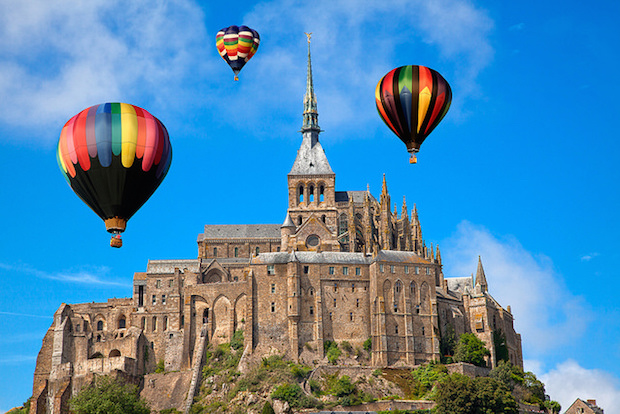
Mont St Michel

Image by Nicolas Raymond on Flickr

1. Science:

The quantity and scale of scientific discoveries has grown exponentially in the last two hundred years. Each new discovery opens the door to new ones that give us greater insight into the way things work and often improves our lives. Henri Becquerel was a French physicist responsible for discovering radioactivity while Pierre and Marie Curie greatly advanced our knowledge of radioactivity through their discovery of radium and polonium. All three were the recipients of the Nobel Prize for Physics in 1903. Microbiologist and chemist Louis Pasteur developed vaccines for rabies, chicken cholera and anthrax and pioneered the process of pasteurization to which he lent his name.

2. Système International d’Unités (International System of Units):

Yes, it was France that developed the metric system, the most widespread system of measurement in the world today. The system was devised in 1795 to replace the irrational and confusing system of weights and measures at the time that comprised several thousand units of measure. The idea was to develop a system based on multiples of ten and thus the mètre (meter), gramme (gram) and litre (liter) became the basic units of measure that remain the international standard in the 21st century.

3. Cinématographie (Cinematography):

Brothers Auguste and Louis Lumière developed the very first commercially viable projector called the Cinématographe in 1895. This marked the dawn of movie history. The brothers would go on to produce forty short films in 1896 alone.

4. Braille: ouis Braille became blind at the age of three and twelve years later developed a system of writing and printing for the blind while attending the Institution Nationale des Jeunes Aveugles (National Institute for Blind Children) in Paris in 1824. Braille consists of sixty-three characters used as part of a six-dot system made of cells and is the most widespread writing system for the blind in use today.

5. Montgolfière et Parachute (Hot air balloon and Parachute):

You might be surprised to learn that these too methods of aerial transport were invented by the French. Like the Lumière brothers, Joseph-Michel and his brother Jacques-Étienne Montgolfier were another pair of inventors who in 1783 successfully demonstrated the very first manned flight. The balloon flew over Paris and remained airborne twenty-five minutes. Although famed Italian polymath Leonardo Da Vinci came up with the idea of a parachute in 1483 (and the Chinese may even have invented it centuries before) it was French aeronaut Louis-Sébastien Lenormand who, in 1783, performed the first successful parachute landing that made parachuting a viable feat.

6. Photographie (Photography):

French inventor Nicéphore Niépce can be credited with creating the first permanent photographic image c. 1826 by way of the heliographic (sun drawing) process that used light to produce pictures. Niépce’s interest in lithography led him to develop this method as a way to compensate for his lack of artistic ability. The exposure time lasted a total of eight hours but his invention paved the way for future development of the photographic process.

Many of these French inventions have shaped the world as we know it today.

The next time you watch a movie, take a photograph, or use the metric system, take a moment to remember the origins of these inventions and the ways they have enhanced your life. Thanks to Niépce, we can capture moments in time and cherish memories through photographs for many years to come.

Thanks to les frères Lumière (the Lumière brothers), we can be entertained, informed and moved by motion pictures. Because of Louis Pasteur, we now have vaccines against certain deadly diseases while the contributions of the Curies and Becquerel have opened the door to breakthroughs in chemistry and nuclear physics.

Of course, there are many more inventions attributed to the French but it would take a book to explore them all in detail. So join me in saying “Merci, la France!” (Thank you, France!)
Cle France LOGO

Blog submitted by: Alex at The French Property Network - Cle France.

This blog was originally posted on The French Language Blog pages.

Add CommentViews: 5818

Follow Us for the Latest Info

Cle France You Tube Cle France Instagram Cle France Blue Sky Social Cle France Facebook

Quick Search

Minimum Beds/Baths

Price Range

Land in sq metres (1 acre = 4000M2)

Join the Mailing List

Select subscriber list :

Property of the Week

Property of the Week
 
Detached Country House with Open Views and Barn

Lovely Countryside Location

AMR00110 - Dordogne

REDUCED to €149,000 FAI