


Market Insight - 26th October 2026
- Details
Is The Correction Starting?...
Expect volatility in the coming days.
Wednesday sees the UK budget at around 12 noon.
The budget has historically caused big moves in exchange rates.
Today has already seen such a move for the Pound.
The market open reported a 0.33% drop for Sterling versus the Euro.
We are expecting more of the same throughout this week.
Here at Regency FX we are positioned to help our clients potentially mitigate exchange rate risk.
We would absolutely encourage all of our clients to reach out to us to discuss options.
On top of all that there's interest rate decisions from the US and the Eurozone.
Plenty to keep everyone occupied!
Economic calendar:
US: Wednesday 18:00 FED Interest Rate Decision
EUR: Thursday 13:15pm ECB Interest Rate Decision.

Get ahead of the game and read our Guide to Foreign Currency Exchange.
Download the Guide Here - with no obligation of course.
Kind regards,
David Evans
Co-Founder of Cle France.
- Great exchange rates
- Quick and easy transfers
- No transfer fees
- Expert help and guidance
- Authorised by the FCA
Current rates:
Monday 26th October 2026 at 12:30
£1.00 GBP = 1.1925 EUR
£1.00 GBP = 1.3355 USD
£1.00 GBP = 1.9000 AUD
£1.00 GBP = 2.3490 NZD
£1.00 GBP = 1.8710 CAD
£1.00 GBP = 1.1030 CHF
-
Want to Learn More?
- We have created a selection of Free PDF Guides for you to download covering many aspects of buying property abroad, visit our PDF Guides Page today or download our "Buying A Property in France" Guide PDF document.
-
- At Clé France / Regency FX, many of our customers have a need for currency exchange.
- We are pleased to offer our customers favourable exchange rates on international currency transfers.
- As a Clé France website visitor, you qualify for preferential exchange rates when you transact through Regency FX.
How to Save Money on your foreign currency transfers
- Regency FX can save you money by offering more competitive rates of exchange than your bank.
- Clients can typically save you 3-4% of the total transaction value, which can result in significant cost savings.
- All client funds are held in segregated accounts with top-tier banks keeping your money safe and secure.
- Cle France has partnered with Regency FX, a trusted and fully safeguarded currency exchange provider, to bring you even better service and exclusive benefits when transferring money internationally.
For everything you need to know about French property visit www.clefrance.co.uk
Market Insight - 21st October 2026
- Details
Pound pushing ever higher versus the Euro....
HANG ON TO YOUR HATS AS THE DOWNSIDE RISK JUMPS DRAMATICALLY
October has seen an absolutely meteoric rise for Sterling against the Euro.
Closing in on almost a 2.5% gain in a handful of weeks.
Bolstered by better than expected economic numbers in the UK and growing unrest in Europe.
The important note is how to protect yourself from potential downside risk.
With the UK budget looming, there's plenty of catalysts on the horizon for a possible retracement back to previous rates.
What are the options?
This is exactly the time to be speaking to your dedicated account manager here at Regency FX.
Based on your own unique circumstances your account manager can potentially offer solutions to enable you to "lock in" a rate of exchange.
Now could well be the time to take action.
Outside of this there's plenty of news at the end of the week that could stir markets.
Global services and manufacturing data gets released throughout the day on Friday.
Historically this has sometimes made exchange rates shift dramatically.
Next week is equally lively with US, Canadian and Eurozone interest rate decisions being reported.
Hang on to your hats.
Economic calendar:
Global: Friday Manufacturing and Services Data.
Get ahead of the game and read our Guide to Foreign Currency Exchange.
Download the Guide Here - with no obligation of course.
Kind regards,
David Evans
Co-Founder of Cle France.
- Great exchange rates
- Quick and easy transfers
- No transfer fees
- Expert help and guidance
- Authorised by the FCA
Current rates:
Wednesday 21st October 2026 at 11:15
£1.00 GBP = 1.1940 EUR
£1.00 GBP = 1.3395 USD
£1.00 GBP = 1.9070 AUD
£1.00 GBP = 2.3555 NZD
£1.00 GBP = 1.8825 CAD
£1.00 GBP = 1.1060 CHF
-
Want to Learn More?
- We have created a selection of Free PDF Guides for you to download covering many aspects of buying property abroad, visit our PDF Guides Page today or download our "Buying A Property in France" Guide PDF document.
-
- At Clé France / Regency FX, many of our customers have a need for currency exchange.
- We are pleased to offer our customers favourable exchange rates on international currency transfers.
- As a Clé France website visitor, you qualify for preferential exchange rates when you transact through Regency FX.
How to Save Money on your foreign currency transfers
- Regency FX can save you money by offering more competitive rates of exchange than your bank.
- Clients can typically save you 3-4% of the total transaction value, which can result in significant cost savings.
- All client funds are held in segregated accounts with top-tier banks keeping your money safe and secure.
- Cle France has partnered with Regency FX, a trusted and fully safeguarded currency exchange provider, to bring you even better service and exclusive benefits when transferring money internationally.
For everything you need to know about French property visit www.clefrance.co.uk
Market Insight - 19th October 2026
- Details
Sterling Strengthens: Act Now Before the Budget...
Sterling has strengthened in recent weeks, but the 28th October Budget could change the picture.
Investors will be watching closely for measures to address government borrowing and the UK’s public finances.
If the Budget disappoints markets, sterling could weaken, reducing the amount you receive for your pounds.
If you have an upcoming international payment, now is the time to review your options.
Speak to your Regency FX account manager today to discuss current rates and whether securing an exchange rate now could help protect your position to ensure your money goes further.
Don’t leave your next currency transfer to chance. Get in touch today.
Don’t wait. Contact us now.
Get ahead of the game and read our Guide to Foreign Currency Exchange.
Download the Guide Here - with no obligation of course.
Kind regards,
David Evans
Co-Founder of Cle France.
- Great exchange rates
- Quick and easy transfers
- No transfer fees
- Expert help and guidance
- Authorised by the FCA
Current rates:
Monday 19th October 2026 at 12:45
£1.00 GBP = 1.1880 EUR
£1.00 GBP = 1.3335 USD
£1.00 GBP = 1.9085 AUD
£1.00 GBP = 2.3520 NZD
£1.00 GBP = 1.8770 CAD
£1.00 GBP = 1.1000 CHF
-
Want to Learn More?
- We have created a selection of Free PDF Guides for you to download covering many aspects of buying property abroad, visit our PDF Guides Page today or download our "Buying A Property in France" Guide PDF document.
-
- At Clé France / Regency FX, many of our customers have a need for currency exchange.
- We are pleased to offer our customers favourable exchange rates on international currency transfers.
- As a Clé France website visitor, you qualify for preferential exchange rates when you transact through Regency FX.
How to Save Money on your foreign currency transfers
- Regency FX can save you money by offering more competitive rates of exchange than your bank.
- Clients can typically save you 3-4% of the total transaction value, which can result in significant cost savings.
- All client funds are held in segregated accounts with top-tier banks keeping your money safe and secure.
- Cle France has partnered with Regency FX, a trusted and fully safeguarded currency exchange provider, to bring you even better service and exclusive benefits when transferring money internationally.
For everything you need to know about French property visit www.clefrance.co.uk
Market Insight - 8th September 2026
- Details
A quick look at this weeks activity...
All Eyes On The FED...
Inflation numbers drive interest rate decisions.
The big question is what effect the Iran conflict is having on global prices.
With oil touching above 90 bucks a barrel, what's the knock on effect?
Seemingly not as extensive as first feared.
Combined with tariff troubles being somewhat muted, there's a fairly wide range of inflation predictions from economists.
Relatively standard fare for anyone following global economic stories.
Friday this week sees the US's confirmed inflation rate, but all the explosive activity is next week.
Most major interest rate decisions come out in the same week, and that's what's coming down the tracks.
There is a big one in store imminently, however, as the ECB is expected to hike on 25 points on Thursday this week.
How we can help you...
Here at Regency FX we keep a close eye on all financial news and signpost what could cause volatility.
Whilst no one has a crystal ball, and often these news stories end up being a storm in a teacup, it's often useful to know when avoidable potential risks are looming on the horizon.
Sometimes timing constraints or a fixed chain of events means no preliminary action can be taken.
However, in some situations, potential risk can be mitigated.
Our team of dedicated account managers is always on hand to discuss methods of minimising those risks.
Key dates for your calendar:
CHN: Wednesday 2:30am Inflation Report
EUR: Thursday 1:15pm ECB Interest Rate Decision
EUR: Thursday 1:45pm ECB Press Conference
USA: Friday 1:30pm Inflation Report
So what next, what should you do?
As ever we look forward to keeping you in the loop and look out for our next update.
Our friendly currency experts are here to assist you and guide you through the markets, we offer a first-class service and even an online platform so you can monitor your transaction in real time.
Our business ethos is based on bank beating rates and fantastic customer service, click the link below for a no obligation quotation and see the savings for yourself.
Don’t wait. Contact us now.
Or to find out our latest rates, click below.
Get ahead of the game and read our Guide to Foreign Currency Exchange.
Download the Guide Here - with no obligation of course.
Kind regards,
David Evans
Co-Founder of Cle France.
- Great exchange rates
- Quick and easy transfers
- No transfer fees
- Expert help and guidance
- Authorised by the FCA
Current rates:
Tuesday 8th September 2026 at 08:45
£1.00 GBP = 1.1650 EUR
£1.00 GBP = 1.3530 USD
£1.00 GBP = 1.8760 AUD
£1.00 GBP = 2.3155 NZD
£1.00 GBP = 1.8665 CAD
£1.00 GBP = 1.0970 CHF
-
Want to Learn More?
- We have created a selection of Free PDF Guides for you to download covering many aspects of buying property abroad, visit our PDF Guides Page today or download our "Buying A Property in France" Guide PDF document.
-
- At Clé France / Regency FX, many of our customers have a need for currency exchange.
- We are pleased to offer our customers favourable exchange rates on international currency transfers.
- As a Clé France website visitor, you qualify for preferential exchange rates when you transact through Regency FX.
How to Save Money on your foreign currency transfers
- Regency FX can save you money by offering more competitive rates of exchange than your bank.
- Clients can typically save you 3-4% of the total transaction value, which can result in significant cost savings.
- All client funds are held in segregated accounts with top-tier banks keeping your money safe and secure.
- Cle France has partnered with Regency FX, a trusted and fully safeguarded currency exchange provider, to bring you even better service and exclusive benefits when transferring money internationally.
For everything you need to know about French property visit www.clefrance.co.uk
Happy Bastille Day
- Details
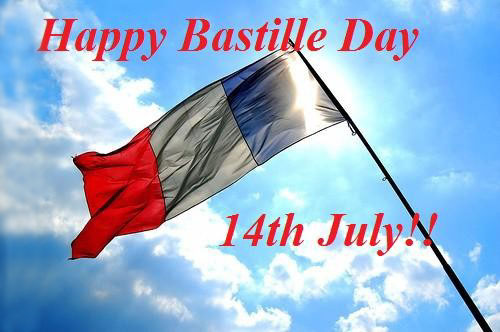
We at Cle France are still working ergh! but... Happy Bastille Day to everyone!
What do people do on Bastille day?
Many people attend large-scale public celebrations. These often include:
Military and civilian parades.
Musical performances.
Communal meals.
Dances.
Balls.
Spectacular fireworks displays.
There is a large military parade in Paris in the morning of July 14. Service men and women from various units, including cadets from military schools, the French Navy and the French Foreign Legion, participate in the parade. The parade ends with the Paris Fire Brigade. Military aircraft fly over the parade route during the parade. The French president opens the parade and reviews the troops and thousands of people line the route. Other people spend the day quietly and eat a celebratory meal or picnic with family and close friends.
Some Helpful french phrases.
Cette semaine on fête le 14 juillet ou la fête nationale or Bastille Day as it’s known in English speaking countries. Le 14 juillet is something like la version française (the French version) of the fourth of July.
Pendant le 14 juillet there are a few big celebrations: le défilé militaire (the military parade) during the day and then at night les spectacle de feux d’artifice (the fireworks shows). However, cette semaine (this week) I learned something about les feux d’artifice that I didn’t know before.
Au 13 juillet, while at home I suddenly heard the loud bangs des feux d’artifice going off in the distance. I thought I’d missed le spectacle!
It turns out that les spectacles de feux d’artifice are spread out over a few days. Smaller towns have their spectacles earlier so that everyone is sure to come to the bigger cities during la fête nationale.
One other way to fêter (celebrate) is, bien sûr, to have a good time avec tes amis (with your friends). Just be careful, if you have too much fun you might wake up the next day with la gueule de bois (a hangover)!
Voici un petit vocabulaire de feux d’artifice :
Black snake - Pharaoh’s serpent le serpent du pharaon
Bottle - rocket la fusée
Firecracker - le pétard
Firework - le feu d’artifice
Fireworks show - le spectacle de feux d’artifice
Fountain - la fontaine
Roman candle - la chandelle romaine
Sparkler - le cierge magique
Public life
Bastille Day is a public holiday in France so post offices, banks, and many businesses are closed. Restaurants and cafes outside of tourist areas may also be closed. However, bakeries and some stores in Paris, as well as at airports and railway stations and along major highways, are open.
Public transport service schedules vary depending on where one lives and intends to travel. Roads in the centres of villages, towns and cities (particularly in Paris) may be closed for parades and other large public events.
Background
The Bastille is a medieval fortress and prison in Paris. Many people in France associated it with the harsh rule of the Bourbon monarchy in the late 1700s. On July 14, 1789, troops stormed the Bastille. This was a pivotal event at the beginning of the French Revolution. Fête de la Fédération was held on July 14, 1790. This was a way to celebrate the establishment of a constitutional monarchy in France.
Official celebrations were held in Paris on June 30, 1878, to honour the Republic of France. On July 14, 1879, more official celebrations were held. These included a military review in Longchamp near Paris and celebrations all over the country. A politician named Benjamin Raspail proposed that July 14 should become a holiday in France in 1880. The law was enacted on July 6, 1880. Bastille Day was a public holiday for the first time on July 14, 1880.
The military parade in Paris has been held every year since 1880, except during World War II. The Free French Forces paraded on this date in London, England from 1940 until 1944. Jean Michel Jarre held a concert in Paris that attracted one million people, then the largest recorded crowd at an outdoor concert, in 1979. Special celebrations were held for the 200th anniversary of the French revolution in 1989. The French football team became world champions on July 12, 1998. This sparked celebrations throughout France on Bastille Day.
Bastille Day celebrations are held in French communities and the Institut de France around the world. Such events in the United States are held in Milwaukee, Minneapolis, New York City, Philadelphia, San Francisco and Seattle. There are festivals of French culture in Franschhoek, South Africa, and Hungary.
Symbols
The Eiffel Tower in Paris and the French national flag, or tricolour, are important symbols of Bastille Day. The French national flag is one-and-a-half times as wide as it is tall. It consists of three vertical bands of equal width coloured blue, white and red. The same colours are displayed in bunting and banners of many shapes on Bastille Day. People may also wear clothing or face paint in these colours.

Blog submitted by: Alex at The French Property Network - Cle France.