Travelling to France for the Christmas Markets
It’s the most wonderful time of the year, especially in France. The French love their Christmas markets and do them very well, and they make the perfect excuse for a seasonal weekend away.
When travelling between the UK and France we always use LeShuttle which can get you from Folkestone to Calais in just 35 minutes, and from there you are spoiled for choice with lots of Christmas markets dotted across the country. If you are planning a trip in November or December read on for our pick of the French festive fun.
Top French Christmas Market destinations
If you have never visited a French Christmas market before, these are some of the most popular. These are the Christmas markets in France that see tourists and locals revisit them time and time again. Probably because they each offer something a little different from the next, all with that familiar Christmas atmosphere.
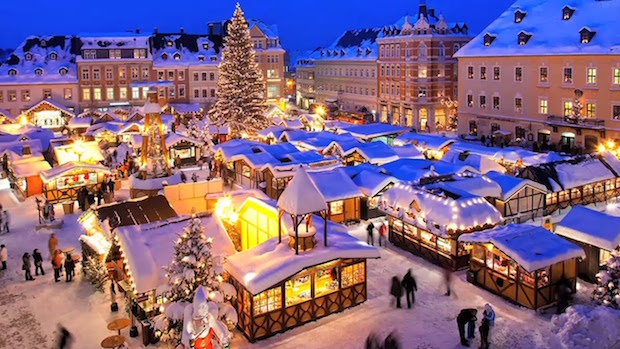
Strasbourg Christmas Market
Where in France: Place de la Cathédrale, Strasbourg, Bas-Rhin, Grand Est
Drive from Calais: 621km / 5h 30m
The Christmas market in Strasbourg is one of the oldest and best loved festive celebrations in the country, dating back to 1570. It has a vintage feel, with many traditional craft stalls that will make you think of Christmas celebrations from yesteryear. The city’s historic quarter, known as ‘Petite France’, is a dream to stroll through on a winter’s night, too. Be sure to grab a mulled wine to sip as you wander among 300 twinkling chalets selling festive treats.
Metz Christmas Market
Where in France: Place Saint Louis, Metz, Moselle, Grand Est
Drive from Calais: 633km / 6h 30m
Perhaps the second most popular Christmas market in France after Strasbourg, the Christmas market in Metz is spread across the city in five different areas. You can shop for baubles and tree toppers, delicious festive treats and sensational local wine, plus unique Christmas souvenirs.
Reims Christmas Market
Where in France: Cathédrale Notre-Dame de Reims, Reims, Marne, Grand Est
Drive from Calais: 274km / 2h 20m
The stunning cathedral in the centre of Reims is illuminated, adding to the festive glow and magic of the city at Christmas time. You’ll find all the usual favourites at this Christmas market, such as classy glass decorations, garlands, chocolates and roasted chestnuts. How about a steaming cup of mulled wine to keep the cold at bay, or even a cheeky glass of champagne, for which the city is famous?
Amiens Christmas Market
Where in France: Place Gambetta, Amiens, Somme, Hauts-de-France
Distance from Calais: 157km / 1h 39m
Amiens is the capital of Picardy and home to France’s largest Gothic cathedral that gets beautifully lit up throughout December. It’s the perfect backdrop to the Christmas market. The market is one of the largest in northern France with over 130 stalls. This is the place for unusual items like Le Creuset kitchenware and regionally made glass. Local specialties include Beauvais chocolate and macarons made in Amiens.
Bordeaux Christmas Market
Where in France: Allées de Tourny, Gironde, Nouvelle-Aquitaine
Drive from Calais: 868km / 7h 40m
If you travel further south in France, a trip to Bordeaux to visit their Christmas market is definitely in order. Enjoy a cup of something hot and spicy as you browse the selection of unique gifts from over 150 exhibitors and vendors, including produce from every corner of France. Sample local beers or wine and ensure everyone on your Christmas list gets something special!
Lille Christmas Market
Where in France: Place Rihour, Lille, Nord, Hauts-de-France
Drive from Calais: 112km / 1h 30m
Lille loves to get festive and you’ll find the whole town dons its Christmas lights and decorations during December. Nestled in the city centre, 90 wooden chalets teem with gift ideas, nativity figurines, Christmas decorations and festive food. As well as regional specialities there’s the classic festive treats to enjoy like gingerbread, roast chestnuts and freshly cooked pralines.
Colmar Christmas Market
Where in France: Place Jeanne d'Arc, Colmar, Haut-Rhin, Grand Est
Distance from Calais: 610km / 6h 20m
For a quintessentially ‘French’ experience, visit the Christmas market in the picturesque Alsace town of Colmar. Place Rapp in Colmar’s market has a huge, 800 square-meter ice rink and Christmas-themed rollercoaster. Listen to the children’s choir as they float along the canals lined with half-timbered houses as you shop for locally crafted gifts and souvenirs.
Toulouse Christmas Market
Where in France: Place du Capitole, Toulouse
Drive from Calais: 962km / 9h 20m
Held in December in the very heart of Toulouse, this is an impressive French Christmas market featuring original gift ideas from local woodcrafts to regional specialities. There’s something for everyone here including toys, pottery, jewellery, candles, clothing and leather goods. Toulouse is France’s fourth biggest city so as well as the market, be sure to stroll around its historic centre.
Arras Christmas Market
Where in France: Grand Place, Arras, Pas-de-Calais, Hauts-de-France
Distance from Calais: 109km / 1h 10m
You can’t miss the fantastic centrepiece of the Arras Christmas market – an enormous Ferris wheel. Take a ride to see views of the surrounding festivities and Flemish architecture. After a restorative mulled wine, browse the market stalls, visit the unique Christmas tree roundabout, or try skating on the natural ice-rink. Foodies should note that Arras is famous for its Gaufres - waffles of Flemish origin that are best served smothered in melted chocolate. Yum!
Other less well-known French Christmas markets
Smaller and less busy, if you need a quieter Christmas shop (but with no less magic) then these are the spots to explore.
Avignon Christmas Market
Where in France: Place de l'Horloge, Avignon, Provence-Alpes-Côte-d'Azur
Drive from Calais: 983km / 8h 47m
Avignon’s grand Christmas Market runs throughout December in Place de l'Horloge, a central square. As well as streets lit up with fairy lights there’s live music and stalls selling crafts and food. A must see is the ‘Chemin des Crèches’, a very pretty walk through the different animated and illuminated nativity scenes, allowing you to discover the fabulous traditional ‘santons’ figures which are hand-painted figurines made from wood or clay.
Mulhouse Christmas Market
Where in France: Place de la Réunion, Mulhouse, Haut-Rhin, Grand Est
Drive from Calais: 666km / 6h 45m
Famous for its textiles, the pretty Alsace enclave of Mulhouse decorates its streets and market stalls with luxury Christmas fabric, which is made each year to mark the occasion. The stalls are within the glow of the church of Saint-Etienne which is lit for the festive season. Around 100 Christmas huts present local culinary specialities including foie gras, gingerbread and Bredeles (small cakes). While you're here, visit one of the town's many museums, including the Musée de l’Impression sur Etoffes (fabric printing museum).
Le Touquet Christmas Market
Where in France: Le Touquet-Paris Plage, Pas-de-Calais, Hauts-de-France
Drive from Calais: 70km / 1h
The stylish and fashionable seaside resort of Le Touquet stages beautiful Christmas celebrations each year. The town and surrounding dunes twinkle with fairy lights and entertainment includes carol singing and a Saint Nicolas parade. The stalls sell everything you need for the perfect Christmas gift including jewellery, hand-made wooden toys, and gourmet specialities including champagne and cheese.
Rouen Christmas Market
Where in France: Place de la Cathédrale, Rouen, Normandy
Drive from Calais: 274km / 2h 45m
Rouen has dubbed its Christmas event ’Rouen givrée’ (Frosted Rouen), and sees the whole town undergo a magical transformation. At the Christmas Market, held in front of the stunning cathedral, over 70 wooden chalets sell all manner of local fayre, such as cheeses, wines and sweets, traditional arts and crafts and Christmas decorations. Warm yourself up with a mulled cider or hot Calvados and honey before taking a turn on the ferris wheel on Place du Vieux Marché.
Licques Christmas Market
Where in France: Place de la Marie, Licques, Pas-de-Calais, Hauts-de-France
Drive from Calais: 21km / 30 minutes
This is one of the more unusual Christmas markets in France and only runs for three days. Because the town is known for its exceptional poultry, there is a Fête de la Dinde, which is a live parade of turkeys through the town centre, followed by local dignitaries and organisations. Licques Christmas market is where you can buy lots of festive treats to eat as well as traditional crafts and decorations. As the closest Christmas market to our Calais terminal, why not include Licques in a festive day trip to France?
What is the most Christmassy town in France?
It’s hard to say, but festivities in France don’t come much twinklier than in Strasbourg, which calls itself the ‘Capital of Christmas’. As well as the Christmas market itself, which spills out over large parts of the city’s old town, Strasbourg plays host to carol singers, a children’s Christmas village and the tallest decorated Christmas tree in Europe. But smaller towns like Colmar perhaps offer something cosier, and if it's Christmas twinkle you want, you can’t beat the City of Lights itself, Paris.
What is one unusual Christmas tradition in France?
There are lots of similarities with how Christmas is celebrated in the UK, but perhaps the biggest difference is that for some French families, December 6th is the day that presents are exchanged. This is because it is the feast day of St Nicholas, the patron saint of children, who helped inspire the figure of Father Christmas. Children leave out shoes for St Nicholas to fill with presents (but only for the good children). This is a Christmas tradition strongest in north and north-eastern France.
When do Christmas markets start in France?
Christmas markets in France usually start towards the end of November and run through December, and some even remain open until the first week of January. If it’s your first time to a French Christmas market, here are five must dos, and some other ideas to help get you feeling festive in France.
Thanks to Le Shuttle for providing the background to this blog.
For everything you need to know about French property visit www.clefrance.co.uk