UK Office: 0044 (0)1440 820 358

Clé France

The French Property Network

Apr 1

April Fools Day - Paper Fish

In France, an April Fool's joke is known as Poisson d'Avril - April Fish. Why else would we show you a picture of a fish rather than a house for sale in France!

Many a 1st April has been spent with me walking round completely oblivious to the fact I have a paper fish on my back, read on to learn why.

In all regions of France there will be a lot more Fish available and being bought for celebratory lunches, a bit like Pancake Day BUT with Fish!

April Fools day in France

Photo by OrigamiNate on Flickr.

Humour can be a bit hard to understand in another language, whether it’s a "knock knock" joke, or an inside joke that you’re not in on. Heureusement (fortunately), April Fool’s Day exists in France. That said, it has a different set of traditions and a very different name: April Fish or in French, Poisson d’arvil.

The holiday is celebrated with des plaisanteires et des canulars (jokes and pranks), but also by trying to accrocher un poisson de papier dans le dos de tes amis (stick paper fish on your friends’ backs)!

The name poisson d’avril comes from an old tradition dating back to 1564. La légende veut que (Legend has it that) the year used to start on April 1st, but was changed to January 1st by Charles IX. The old new year’s tradition involved a gift exchange, mais (but) some people n’étaient pas au courant du changement (were not aware of the change) and continued to exchange gifts on April 1st after le changement. Other people then used the occasion de se moquer d’eux (to make fun of them)!

But why fish? The old new year était pendant (was during) the end of le Carême (Lent). Christians would be fasting, but they could still eat fish. The joke of giving un faux poisson (a fake fish) began as une blague (a joke) on the old tradition of giving real fish as gifts. Donc le nom (Thus the name), poisson d’avril.

The tradition continues today and kids all over France will try to sneak up and accrocher un poisson papier dans le dos de ses amis. When the friend le découvre (finds out), the surprise is met with shouts of Poisson d’arvil! much the same way un gag similaire (a similar gag) would be met with April Fool’s! in the English speaking world.

Voici une liste de vocabulaire pour le poisson d’arvil:

Une plaisanterie – A joke

Une blague – A joke, a trick

Un canular – A prank

Un gag – A joke, a gag

Un poisson papier – A paper Fish

Poisson d’avril! – April Fools!

Accrother un poisson de papier dans le dos de quelqu’un – Stick a paper fish on someone’s back

Start your pranking out right and accrochez un poisson de papier dans le dos de quelqu’un!

Cle Mortgages

Blog submitted by: Alex at The French Property Network - Cle France.

This blog was originally posted on The French Language Blog pages.

Add CommentViews: 5287
Mar 4

Mardi Gras celebrations in France and yummy recipe for Crepes

On Shrove Tuesday across the UK there will be people practising their pancake tossing !

But let us learn a little of how it is celebrated in France.

Origins of Mardi Gras

Mardi Gras is a well-known event in New Orleans and in Brazil, but why is Mardi Gras celebrated in France?

Mardi Gras has a few different roots, some in Christian culture, and some in pagan culture. These days, Mardi Gras is seen as a Catholic tradition, but what people actually do on this day is quite different to what people do on other Catholic holidays. Like Christmas and Easter, Mardi Gras includes a very large meal and a gathering of friends and family, but neither Christmas nor Easter includes masks, costumes and unlimited dancing and fooling around. For this reason, Mardi Gras can be interpreted as a mix of Catholic and pagan traditions: the holiday is Catholic, and the means of celebrating it stem from local traditions.

As we know the period of Lent is the period leading up to Easter. Since the period of Lent requires Catholics to fast, or to give up certain foods if not fasting, as well as make general resolutions for oneself that require self-discipline, Mardi Gras is said to have been created for one last day of unlimited fun and eating before giving up so much during Lent. Originally, a fattened calf was slaughtered as a Mardi Gras feast; in some cultures, pancakes became a traditional Mardi Gras meal because the milk and butter had to be used up before Lent began, or thrown away.

The name Mardi Gras literally translates to Tuesday Fat (or in English: Fat Tuesday). The name comes from fattening the calf and feasting on it; Tuesday is always the day that precedes the beginning of Lent (which starts on Ash Wednesday).

While the origins of Mardi Gras in France are religious and spiritual, Mardi Gras is mainly celebrated today simply because it is fun. While many Catholics still actively observe Lent and the traditions of not indulging excessively, Mardi Gras is celebrated not only by those Catholics who are going into a period of limited indulgence, but also by the general public.

The biggest Mardi Gras celebrations in France are in Nice and in Paris. However, there are celebrations big and small all over North West France in cities, towns and villages.

So whether you observe it as a religious occasion or an excuse for a party the one thing in common is the delightful taste, when cooked correctly, of the humble Pancake or Crêpe.

Cle France Blogs

Recipe & instructions for the perfect French crêpe.

A delicious French crêpe is versatile and not only for one day a year, as we all know there is always a crêpe van at a French market and whatever your choice of topping it is a treat worth signing up for.

But a well cooked crêpe at home can add a sophisticated touch to any dinner or desert course. It may look simple, but aspiring cooks are often disappointed that their results don't turn out like the thin, delicate ones found from the van at the market or indulged in at a fancy restaurant. However, don't despair – we have the recipe and method for you to impress even the harshest of critics.

As with many things it is the technique involved that makes the difference !

So how to make the perfect French Crêpe? This crêpe recipe makes a double batch because the perfect number of eggs per batch is 1.5 and leftovers are always nice!

Instructions

Things You will Need:

  • a non-stick crêpe pan or skillet, preferably thick bottomed.
  • 3 cups milk
  • 2 cups flour
  • 2 tablespoons butter
  • 2 tsp sugar (if you want a sweet, dessert style French crêpe)
  • 3 eggs
  • butter wrapper
  • large spoon or ladle
  • plate
  • thin spatula
  • eager children, hungry neighbours or friends and family

First beat the three eggs in a small bowl. Then, whisk together the flour, milk, and eggs in a large bowl until you have no lumps. Microwave the butter in a small cup or bowl for about 20 seconds. Add a few spoonfuls of the batter to the melted butter and mix well. Then whisk the mixture into the batter. Tilt the batter against the side of the bowl to make sure all lumps are gone.

The most important step to making a French crêpe is greasing the crêpe pan. Too much butter will cause burning and not enough will cause sticking. Warm the pan slightly on the stove. Using a tiny piece of butter, grease the crêpe pan with the butter wrapper. Push down very hard so that the pan slowly absorbs the butter.

Then, heat the crêpe pan to medium heat. You might need to adjust this down slightly as you cook each French crêpe.

Once the crêpe pan is heated, hold it in your left hand (if you are left handed hold it in your right hand) off the heat. Use a large spoon or ladle to scoop out a few tablespoons of batter and pour it into the middle of the pan. Quickly, but steadily, tilt the pan to swirl the batter and coat the pan as thinly as possible and form the French crêpe.

When the edge starts to firm (don't let it get brown yet), loosen it by sliding a thin spatula underneath and around the edges. Then, here comes the fun part, flip the French crêpe over (check the ceiling height first!). Cook the other side for about 30 seconds and then lift the crêpe pan and flip the crêpe over onto the plate.

Hold the crêpe pan in your left hand (if you're right handed) off the heat for about 20-30 seconds before pouring the next one. This lets the pan cool down enough so that the batter cooks less quickly when it first hits the pan and can spread more thinly.

Bask in the glory of being the best Crêpe maker in the house and try to have some left to enjoy your own perfect French crêpe!

Blog submitted by: David at Cle France.

Cle France Logo

For everything you need to know about French property visit www.clefrance.co.uk

Add CommentViews: 13292
Feb 6

Bank of England have Cut the Base Interest Rate

Thursday 6th February 2025.

Some good news, today the Bank of England has announced it is reducing the base rate to 4.50% (previously 4.75%).

So this is a good time for you to contact our Mortgage and Financial Services Partner, if you are considering a mortgage to help fund a property purchase in France, you may wish to contact them to see if they can help and advise you, best of luck.

You can contact them direct here.

 Enquire Now

Kind regards,
Alex at Clé France.

If you have not done so already, check out our Property Guides here.

Herts FS

Add CommentViews: 1386
Nov 2

Join Us on Social Media Platforms

Join Us on our Social Media Platforms

It is a Bank Holiday Weekend in France [of sorts] so whilst most are enjoying their well earned rest and spending time with family and friends we wanted to ask a favour of you, yes that's right, you...

We want you to connect with us, subscribe, follow us, give a thumbs-up to our social media activity.

Did you know we have more than 10 times website subscribers than Facebook followers for example?

So there must be more of you out there on social media!

We share more about France and French lifestyle there, as well as property listings and how to buy and sell property.

We also try to make it fun and entertaining, so come and join us where ever you prefer.

Hope to see you soon!

Cle France You Tube Cle France Instagram Cle France Twitter X Cle France Facebook Threads Logo 

Kind regards, 
Sharon & David Evans 
Founders of Cle France.

Add CommentViews: 1257
Aug 22

Future Travel to Europe

There has been a lot of news in the past few days about the future of Travel to Europe from the UK, will there be new rules, a possible visa to apply for etc.

I hope I can help ease the confusion over what is actually changing and when with this timeline, hope it helps you understanding.

- 10th November 2024 (confirmed)

EU entry-exit system comes into effect, requiring British Passport holders to be fingerprinted and provide a facial biometric on entry to the European Union and wider Schengen Area 9but not Ireland or Cyprus).

- May 2025 (not confirmed, but no earlier):

Etias online permit becomes available, with a transitional period of at least six months during which Etais is optional.

- November 2025 (not confirmed, but no earlier):

Etias transitional period ends. A period of grace begins this gives travellers without an Etias a one-time only pass.

- May 2026 (not confirmed, but no earlier):

Grace period ends and all British passport holders must have an Etias.

I hope this helps.

Get expert advice about the Buying & Selling process in France, Post Brexit rules, Healthcare, Currency Exchange and much more.

Get Your Free PDF Guides here

Blog submitted by: David at The French Property Network - Cle France.

Add CommentViews: 1738

Follow Us for the Latest Info

Cle France You Tube Cle France Instagram Cle France Blue Sky Social Cle France Facebook

Quick Search

Minimum Beds/Baths

Price Range

Land in sq metres (1 acre = 4000M2)

Join the Mailing List

Select subscriber list :

Property of the Week

Property of the Week
 
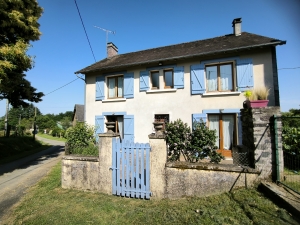
Detached Country House with Open Views and Barn

Lovely Countryside Location

AMR00110 - Dordogne

REDUCED to €149,000 FAI